Native Plant List for New Hampshire, Maine and Vermont
Last updated: September 4, 2026


Native Plants for New Hampshire, Maine & Vermont
New England’s northern tier offers some of the most rewarding native plant gardening in the country. From the rocky coast of Maine to Vermont’s mountain valleys, these three states share a climate that supports an incredible range of woodland wildflowers, tough native shrubs, and elegant ferns that have thrived here for thousands of years.
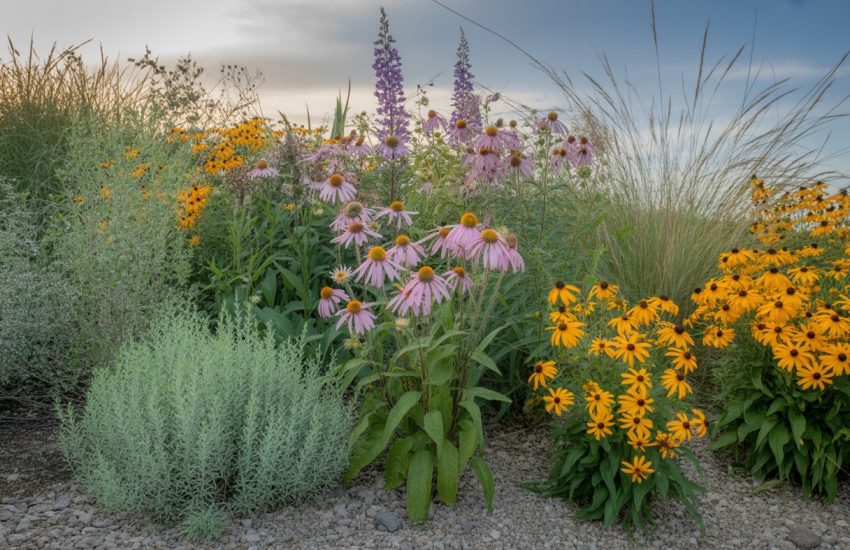
Whether you’re planting a shady woodland garden, a sunny pollinator meadow, or a low-maintenance foundation border, the species below will reward you with seasonal color, wildlife value, and the kind of resilience that only locally adapted plants can deliver. These are plants that belong here — they don’t need coddling, they support native bees and birds, and they look beautiful doing it.
How to Use This List
We’ve organized these plants into tables by type — trees, shrubs, perennials, ferns, and grasses. Each entry includes light and moisture preferences so you can match plants to your specific site conditions. Most of these species are hardy in USDA Zones 3–6, which covers the majority of NH, ME, and VT.
Looking for where to buy? Visit our Native Plant Nursery Directory to find a nursery near you that specializes in locally sourced native plants.
See Also:
- New England Native Flowering Shrubs for Your Yard
- Native Plants of Maine for Landscaping
- Connecticut Native Plants for Landscaping
- Best Privacy Trees for New England
Native Trees
New Hampshire, Maine & Vermont Trees
| Common Name | Scientific Name | Sun | Moisture | Height | Comments |
|---|---|---|---|---|---|
| Balsam Fir | Abies balsamea | F-P | A | 75 ft | Open growth in hot dry locations, evergreen |
| Black maple | Acer nigrum | F-P | A | 60-80 ft | Like Sugar Maple but tolerates alkaline, clay soils |
| Striped Maple | Acer pensylvanicum | P-S | A-W | 16-33 ft | Shade-loving understory tree; striped bark, sex-changing flowers |
| Red Maple | Acer rubrum | F-P | A | 60 ft | Excellent fall color; tolerates wet spring soil |
| Sugar Maple | Acer saccharum | F-P | A | 75 ft | Excellent fall color, beautiful large shade tree |
| Mountain Maple | Acer spicatum | F-P | A | 10–25 ft | Useful in naturalizing |
| Yellow Birch | Betula alleghaniensis | F-P | A | 100 ft | Does best in cool soils, beatuiful bark |
| Mountain Paper Birch | Betula cordifolia | F-P | A-W | 40-60 ft | Relative of Paper Birch; white peeling bark; cool, moist, high sites |
| Paper Birch | Betula papyrifera | F | A | 70 ft | White bark year-round, tolerates poor, dry soil |
| Gray Birch | Betula populifolia | F | A | 40 ft | Does well in poor soils; good for naturalizing |
| American Hornbeam | Carpinus caroliniana | F | A | 30 ft | Use for naturalizing; tolerates periodic flooding |
| American Chestnut | Castanea dentata | F-P | A | 60–100 ft | Chestnut blight-susceptible; mostly stump sprouts now |
| Pagoda Dogwood | Cornus alternifolia | F-P | A | 25 ft | Moist soil is important, white flowers in June |
| Dotted Hawthorn | Crataegus punctata | F-P | A | 15–30 ft | Thorny, flat-topped crown; red fruit persists, feeds birds in winter |
| (Champlain) Hawthorne | Crataegus submollis | F | A | 30 ft | Red fruits in fall attract birds |
| Fleshy Hawthorn | Crataegus succulenta | F-P | A-W | 13-26 ft | Most wide-ranging US hawthorn; thorny thicket shrub, red fleshy fruit |
| White Ash | Fraxinus americana | F | A | 80 ft | Good fall color; tolerates alkaline soil |
| Black Ash | Fraxinus nigra | F-P | W | 40-60 ft | Swamp tree; Critically Endangered due to emerald ash borer |
| Green Ash | Fraxinus pennsylvanica | F-P | A | 60 ft | Grows fast; tolerates salt, drought, alkaline soil |
| Butternut | Juglans cinerea | F | A | 40-60 ft | Edible nuts; declining from butternut canker disease |
| Tamarack | Larix laricina | F | W-A | 80 ft | Good for moist-wet sites & well drained sites |
| Black Gum | Nyssa sylavatica | F- P | A | 50 ft | Excellent yellow-orange fall leaf color |
| American hophornbeam | Ostrya virginiana | F-P | A-D | 40 ft | Slow to establish after transplanting |
| White Spruce | Picea glauca | F-P | A | 60 ft | Good specimen or windbreak; evergreen |
| Black Spruce | Picea mariana | F-P | A | 40 ft | Tolerates wet sites; evergreen |
| Jack Pine | Pinus banksiana | F | D | 50 ft | Useful for windbreaks in sandy soil; evergreen |
| Red Pine | Pinus resinosa | F | D | 80 ft | Good windbreak; tolerates dry soils well |
| Pitch Pine | Pinus rigida | F | D-A | 40–60 ft | Fire-adapted conifer for sandy, rocky, or barren infertile sites |
| White Pine | Pinus strobus | F | A-D | 80 ft | Handsome specimen; not tolerant of salt |
| Bigtooth Aspen | Populus grandidentata | F | A-D | 70 ft | Fast growing; short lived; good yellow fall color |
| Quaking Aspen | Populus trembuloides | F | A | 50 ft | Fast growing, short lived; good yellow fall color |
| Pin Cherry | Prunus pensylvanica | F | A | 35 ft | Adaptable; fast growing; tolerates poor soil |
| Black Cherry | Prunus serotina | F | A | 60 ft | White flowers (spring); wildlife food source |
| White Oak | Quercus alba | F | A | 80 ft | Large tree; transplant when young |
| Chinkapin Oak | Quercus muehlenbergii | F-P | A-D | 40-60 ft | Limestone-loving shade tree; sweet low-tannin acorns feed wildlife |
| Red Oak | Quercus rubra | F | A | 75 ft | Transplants readily; good fall red leaf color |
| Black Willow | Salix nigra | F | W-A | 35 ft | Tolerates wet soils; twigs can cause lawn litter |
| American Mountainash | Sorbus americana | F | A | 30 ft | Fruits good in wildlife landscape |
| Showy Mountain Ash | Sorbus decora | F-P | A | 15–30 ft | Cold-hardy small tree; winter berries bitter; not Europ. mountain ash |
| White Cedar | Thuja occidentalis | F-P | A | 60 ft | Useful hedge plant; tolerates alkaline soil |
| Basswood | Tilia americana | F-P | A | 80 ft | Tolerates alkaline soil; use in urban landscape |
| Eastern Hemlock | Tsuga canadensis | F-S | A | 70 ft | Does not tolerate drought or windy sites |
Native Shrubs
New Hampshire, Maine & Vermont Shrubs
| Common Name | Scientific Name | Sun | Moisture | Height | Comments |
|---|---|---|---|---|---|
| Downy Serviceberry | Amelanchier arborea | F-P | A | 25 ft | Edible/wildlife landscapes; orange fall color |
| Shadblow Serviceberry | Amelanchier canadensis | F-P | A | 20 ft | Edible/wildlife landscapes; yellow/gold fall color |
| Alleghany Serviceberry | Amelanchier laevis | F-P | A | 25 ft | Edible/wildlife landscapes; spring leaves bronze |
| Roundleaf Serviceberry | Amelanchier sanguinea | F-P | A-D | 4-10 ft | Thicket-forming shrub for dry, sandy or rocky soil; sweet edible fruit |
| Bog Rosemary | Andromeda polifolia | F-P | W | 12 in | Evergreen leaves; requires moist acidic soil |
| Black Chokeberry | Aronia melanocarpa | F-P | W-A | 6 ft | Tolerates wet or dry soils; wine-red fall color |
| Resin Birch | Betula glandulosa | F-P | W-A | 1-4 ft | Bog/alpine shrub; glandular twigs; distinct from Bog Birch |
| Bog Birch | Betula pumila | F-P | W | 2-10 ft | Wetland obligate shrub; calcareous fens & bogs; not for dry sites |
| Buttonbush | Cephalanthus occidentalis | F | W | 6 ft | Good for wetland plantings |
| Leatherleaf | Chamaedaphne calyculata | F-P | W | 1-3 ft | Evergreen bog shrub; acidic, saturated soil; early white flowers |
| Sweetfern | Comptonia peregrina | F-P | A-D | 36 in | Aromatic foliage; good in dry and sandy soil |
| Gray Dogwood | Cornus racemosa | F-S | A | 15 ft | Suckering; white fall fruits eaten by many birds |
| Redosier Dogwood | Cornus sericea | F | W-A | 6 ft | Red stems attractive in winter; tolerates wet soil |
| American Filbert | Corylus americana | F-P | A | 15 ft | Wildlife eats fruit; tolerates alkaline soil |
| Swamp Loosestrife | Decodon verticillatus | F-P | W | 3-8 ft | Wetland shrub for pond margins; tolerates standing water |
| Northern Bush Honeysuckle | Diervilla lonicera | F-P | A-D | 2-4 ft | Suckering shrub for dry rocky sites; yellow flowers age red |
| Leatherwood | Dirca palustris | P-S | A | 4–6 ft | Yellow fall color; thrives in moist, shady sites |
| Common Witchhazel | Hamamelis virginiana | F-P | A | 15 ft | Avoid drought; yellow flowers/leaves in fall |
| Beach Heather | Hudsonia tomentosa | F | D | 6-12 in | Silvery dune mat; needs full sun, pure sand, excellent drainage |
| Winterberry | Ilex verticillata | F-P | W-A | 10 ft | Bright red fruits persist into midwinter |
| Common Juniper | Juniperus communis | F | A-D | 36 in | Takes drought, wind, sterile or alkaline soils |
| Lambkill | Kalmia angustifolia | F-P | A | 36 in | Adaptable to many soils; best in acidic soil |
| Bog Laurel | Kalmia polifolia | F-P | W | 1-2 ft | Low bog shrub; needs year-round saturated acidic peat |
| Labrador Tea | Ledum groenlandicum | F-P | W-A | 36 in | Transplants well; good for moist-to-wet sites |
| Sweetgale | Myrica gale | F | A-D | 4 ft | Bushy plant; dark green, aromatic foliage |
| Northern Bayberry | Myrica pensylvanica | F-P | A-D | 6 ft | Good for massing; useful in poor soil sites |
| Bush Cinquefoil | Potentilla fruticosa | F | A-D | 4 ft | Summer-flowering shrub; tolerates alkaline soil |
| Beach Plum | Prunus maritma | F | A | 6 ft | Good for edible landscape; salt-tolerant |
| Chokecherry | Prunus virginiana | F | A | 30 ft | White flowers in spring; wildlife food source |
| Bear Oak | Quercus ilicifolia | F | D | 6-15 ft | Thicket-forming shrub oak; dry sandy/rocky barrens only |
| Rhodora | Rhododendron canadense | F-P | W-A | 36 in | Magenta flowers in spring; best in acidic soil |
| Staghorn Sumac | Rhus typhina | P | A-D | 25 ft | Suckering; good mass plant for dry slopes |
| Meadow Rose | Rosa blanda | F | A | 5 ft | Single light pink flowers; suckering plant |
| Carolina Rose | Rosa carolina | F | A | 5 ft | Pink single flowers midsummer |
| Virginia Rose | Rosa virginiana | F | A | 5 ft | Good in dry & seaside landscape; good barrier |
| Black Raspberry | Rubus occidentalis | F-P | A | 3-6 ft | Fast-spreading edge bramble; cut spent canes after fruiting |
| American Elder | Sambucus canadensis | F | A | 12 ft | Edible landscapes; tolerates alkaline soil |
| Scarlet Elder | Sambucus pubens | F | A | 20 ft | Flowers in July; red fruit mid-summer |
| Three-Toothed Cinquefoil | Sibbaldiopsis tridentata | F-P | A-D | 2-6 in | Evergreen mat for rocky, lean soil; rare/high-elev only south of VA |
| Canadian Yew | Taxus canadensis | P-S | A | 6 ft | Hardiest yew; good for shady landscape |
| Poison Sumac | Toxicodendron vernix | F-P | W | 6-30 ft | Severely allergenic wetland shrub; identification only, do not plant |
| Highbush Cranberry | V. opulus var. trilobum | F-P | A | 12 ft | Use for screening; good for wildlife landscapes |
| Velvetleaf Blueberry | Vaccinium myrtilloides | F-P | A-D | 6–24 in | Low colonial shrub; edible berries; needs acidic, well-drained soil |
| Highbush Blueberry | Vaccinum corymbosum | F | A | 8 ft | Edible/wildlife landscapes; best in acidic soil |
| Mapleleaf Viburnum | Viburnum acerifolium | P-S | A | 6 ft | Good for mass plantings in shady sites |
| Hobblebush | Viburnum alnifolium | P-S | A | 8 ft | Open shrub; good for naturalized landscape |
| Arrowwood Viburnum | Viburnum dentatum | F-P | A | 15 ft | Durable; good hedge; tolerates alkaline soil |
| Nannyberry | Viburnum lentago | F-P | A | 15 ft | Good for wildlife and naturalized landscapes |
Native Perennials & Wildflowers
New Hampshire, Maine & Vermont Ground Cover and Vines
| Common Name | Scientific Name | Sun | Moisture | Height | Comments |
|---|---|---|---|---|---|
| Climbing Fumitory | Adlumia fungosa | P-S | A-W | 6-13 ft (vine) | Lacy biennial vine; small pink flowers; climbs rocks/shrubs. |
| Running Serviceberry | Amelanchier stolonifera | F-P | A | 24 in | Stoloniferous groundcover; forms thickets |
| Field Pussytoes | Antennaria neglecta | F-P | D-A | 2–12 in | Drought-tolerant mat-forming groundcover; host plant for American lady |
| American Groundnut (Potato Bean) | Apios americana | F-P | W-A | 6-10 ft (vine) | Twining vine, fragrant maroon flowers, edible tubers; moist soil |
| Wild Sarsaparilla | Aralia nudicaulis | P-S | A | 1-2 ft | Rhizomatous woodland ground cover; white umbels, dark berries |
| Bearberry | Arctostaphylos uva-ursi | F-P | A-D | 6 in | Best in poor, sandy, acidic soils; salt-tolerant |
| American Bittersweet | Celastrus scandens | F-P | A | -- | Climbing vine; dioecious; tolerates alkaline soil |
| Western Blue Virgin's Bower | Clematis occidentalis | P-F | A | 1-10 ft | Wiry climbing vine; rocky, well-drained sites only |
| Virginbower | Clematis virginiana | F | A | -- | Climbing vine; best in alkaline soil |
| Bunchberry | Cornus canadensis | P-S | A | 6 in | Groundcover; white flowers & red berries (birds) |
| Wild Cucumber | Echinocystis lobata | F-P | A-W | 15-25 ft (annual vine) | Fast annual vine; spiny inedible fruit; reseeds readily |
| Trailing Arbutus | Epigaea repens | P-S | A | 4-6 in | Fragrant evergreen groundcover; acidic soil; never dig from wild |
| Climbing False Buckwheat | Fallopia scandens | F-P | A-W | 10-20 ft (vine) | Fast twining native vine; fall/winter bird seed; give it room |
| Sweet-scented Bedstraw | Galium triflorum | P-S | A | 6-24 in trailing groundcover | Fragrant shade groundcover for rich, consistently moist soil |
| Checkerberry | Gaultheria procumbens | P-S | A | 6 in | Evergreen groundcover; leaves reddish in fall |
| Hops | Humulus lupulus | F-P | A-W | 15-25 ft (vine) | Twining perennial vine; toxic to dogs; female plants produce hop cones |
| Creeping Juniper | Juniperus horizontalis | F | A-D | 12 in | Tolerates hot, dry, alkaline soil; evergreen |
| Twinflower | Linnaea borealis | P-S | A-W | 2-4 in | Evergreen groundcover for cool, acidic, shaded sites; slow to spread |
| Limber Honeysuckle | Lonicera dioica | F-P | A-D | 3-10 ft vine | Non-invasive native vine; berries for birds only; hummingbirds |
| Moonseed | Menispermum canadense | P-F | A-W | Climbs 15-20 ft | Twining native vine; poisonous fruit resembles wild grapes |
| Climbing Hempvine | Mikania scandens | F-P | W | 6–12 ft | Twining wetland vine; frothy white blooms; host for little metalmark |
| Partridgeberry | Mitchella repens | S | A | 2 in | Delicate plant; red fruits persist into winter |
| Yellow wood sorrel | Oxalis stricta | F-S | W-A | 4-12 in | Weedy native groundcover; oxalate leaves, not for eating |
| Woodbine | Parthenocissus quinquefolia | F-S | A-D | -- | Hardy vine; maroon in fall; takes alkaline soil |
| Thicket Creeper | Parthenocissus vitacea | F-P | A-D | 20-35 ft climbing vine | Fast vine; toxic berries; often confused with Virginia Creeper |
| Cloudberry | Rubus chamaemorus | F-P | W | 4-10 in | Acidic bog only; rare outside AK; dioecious, needs both sexes to fruit |
| Northern Dewberry | Rubus flagellaris | F-P | D-A | 6-12 in (trails 3-8 ft) | Trailing bramble, roots at tips; prickly stems; spreads readily |
| Smooth Carrionflower | Smilax herbacea | P-S | A | 6–15 ft (vine) | Herbaceous vine; carrion-scented flowers; non-woody, no prickles |
| Roundleaf Greenbrier | Smilax rotundifolia | F-S | A-D | 10–20+ ft (vine) | Thorny climbing vine; dense wildlife cover, winter berries |
| Cranberry | Vaccinium macrocarpon | F | W-A | 4–8 in | Edible/wildlife landscapes; acidic soil |
| Lowbush Blueberry | Vaccinum angustifolium | F | A | 24 in | Edible/wildlife landscapes; acidic soil |
| Fox Grape | Vitis labruscas | F | A | -- | Handsome foliage; good vine for arbors |
| Riverbank Grape | Vitis riparia | F-P | W-A | 20-50 ft (climbing vine) | Vigorous riverbank vine; cold-hardy parent of hybrid wine grapes |
| Barren Strawberry | Waldsteinia fragarioides | P-S | A | 3-6 in | Evergreen woodland groundcover; yellow flowers; fruit not edible |
Native Ferns
New Hampshire, Maine & Vermont Flowering Perennials
| Common Name | Scientific Name | Sun | Moisture | Height | Comments |
|---|---|---|---|---|---|
| Baneberry | Actaea pachypoda | P-S | A | 24 in | Attractive, but poisonous fruit |
| White Snakeroot | Ageratina altissima | P-S | A-W | 1-4 ft | Toxic woodland perennial; part shade, moist soil; spreads by rhizome |
| Wood Anemone | Anemone quinquefolia | P-S | A | 4–8 in | Spring-ephemeral groundcover; toxic sap, disappears by early summer |
| Mountain Death Camas | Anticlea elegans | F-P | A-D | 1-2.5 ft | HIGHLY TOXIC bulb/foliage; do not confuse with edible Camassia |
| Columbine | Aquilegia canadensis | F-S | A-D | 12 in | Early spring flowers |
| Spikenard | Aralia racemosa | P-S | A-D | 36 in | Good for back of border |
| Silvery Cinquefoil | Argentina anserina | F | W-A | 6–12 in | Yellow flowers, silvery leaves; native ME/NH/VT, introduced MA; spreads by runners |
| Jack-in-the-Pulpit | Arisaema triphyllum | P-S | W-A | 12 in | Flower green and brown; bright red fruit |
| Milkweed | Asclepias syriaca | F | D | 36 in | Attracts butterflies |
| New England Aster | Aster novae-angliae | F-P | A-D | 24 in | Fall flowering; deep purple |
| New York Aster | Aster novi-belgii | F-P | A-D | 24 in | Fall flowering; purple |
| American Sea Rocket | Cakile edentula | F | D | 6-18 in | Annual beach dune pioneer; salt-tolerant; not native on Pacific coast |
| Wild Calla | Calla palustris | P-S | W | 6-12 in | Bog/pond-margin arum; needs saturated soil or shallow water |
| Marsh Marigold | Caltha palustris | F-P | W-A | 12 in | Showy yellow flowers in early spring |
| Harebell | Campanula rotundifolia | F-P | A-D | 12 in | Delicate blue-purple flowers |
| Creeping Sedge | Carex laxiculmis | P-S | A-D | 0.3–1.5 ft | Evergreen dry-shade sedge; slow clumping groundcover, deer resistant |
| Seersucker Sedge | Carex plantaginea | P-S | A | 8–12 in | Puckered-leaf shade sedge; rich moist soil, slow clump, deer resistant |
| Blue Cohosh | Caulophyllum thalictroides | P-S | A-D | 36 in | Blue fruits; back of border |
| Turtlehead | Chelone glabra | P-S | W-A | 24 in | Interesting white flowers in midsummer |
| Water Hemlock | Cicuta maculata | F-P | W | 3-6 ft | Extremely toxic; wetlands/ditches only, not for gardens |
| Bluebead Lily | Clintonia borealis | P-S | A | 12 in | Yellow bell-shaped flowers; blue fruit not for eating |
| Squirrel Corn | Dicentra canadensis | P-S | A | 6–10 in | Spring ephemeral woodland wildflower; toxic, deer resistant |
| Trout-lily | Erythronium americanum | P-S | A | 6 in | Flowers early-spring |
| Joe-pye Weed | Eupatorium maculatum | F | W-A | 4 ft | Purple flowers in fall; attracts butterflies |
| Boneset | Eupatorium perfoliatum | F | W-A | 24 in | Green flowers; good for drying |
| Northern Gentian | Gentianella amarella | F-P | W-A | 4–16 in | Fringed purple autumn flowers; wet mountain meadows & fens |
| Woodland Sunflower | Helianthus divaricatus | F-P | A-D | 2½–6 ft | Rhizomatous colonizer for dry shade; yellow blooms July–Sept |
| Cow parsnip | Heracleum maximum | F-P | A-W | 4-8 ft | Striking wildflower; sap is phototoxic, causes skin burns in sun |
| Blue Flag | Iris versicolor | F-P | W-A | 24 in | Elegant form; blue-purple flowers |
| Tall Blue Lettuce | Lactuca biennis | F-P | A-W | 3–8 ft | Biennial; milky sap can irritate skin |
| Wood Nettle | Laportea canadensis | P-S | A-W | 1-5 ft | Stinging hairs; moist shade; red admiral butterfly host |
| Starry False Lily | Maianthemum stellatum | P-S | A-D | 8-18 in | Rhizomatous woodland groundcover; starry flowers; berries inedible |
| Indian Cucumber-root | Medeola virginiana | P-S | A | 12–24 in | Whorled leaves; upper leaf bases turn red around dark fruit |
| American Wild Mint | Mentha arvensis | F-P | W-A | 6in-2ft | Native wetland mint; spreads by rhizome; flowers at leaf joints |
| Spotted Beebalm | Monarda punctata | F | D | 1-3 ft | Thyme-scented; purple-spotted flowers draw wasps and bees |
| Indian Pipe | Monotropa uniflora | S | A-W | 3-10 in | Non-photosynthetic; parasitizes fungi; never dig or transplant |
| American Ginseng | Panax quinquefolius | P-S | A | 8-24 in | Shade woodland herb; wild roots scarce/protected, buy nursery stock |
| Obedient Plant | Physostegia virginiana | F-S | A-D | 24 in | flowers pink; leaves dark green; cut flowers |
| Pokeweed | Phytolacca americana | F-P | A | 4-10 ft | Poisonous perennial; exceptional fall bird food; self-sows |
| Solomon's Seal | Polygonatum pubescens | P-S | A | 12–30 in | Arching stems w/ white flowers (spring) |
| Common Cinquefoil | Potentilla simplex | F-P | A-D | 4-10 in | Mat-forming groundcover; tolerates mowing, poor soil; deer resistant |
| Rabbit Tobacco | Pseudognaphalium obtusifolium | F-P | A-D | 1-3 ft | Annual/biennial; dry poor soils; cream everlasting flowers fall |
| Bloodroot | Sanguinaria canadensis | P-S | A | 12 in | Showy white flowers in early spring |
| Purple Pitcher Plant | Sarracenia purpurea | F-P | W | 4-12 in (rosette) | Carnivorous bog obligate; needs sphagnum/peat & rainwater |
| Tall Goldenrod | Solidago altissima | F-P | A-D | 3–7 ft | Spreads by rhizome; vital late-season pollinator nectar source |
| Canada Goldenrod | Solidago canadensis | F-P | A | 2-5 ft | Fast-spreading fall bloomer, superb for pollinators; needs room |
| Zigzag Goldenrod | Solidago flexicaulis | P-S | A | 1–3 ft | Shade-loving goldenrod with zigzag stem; blooms late summer-fall |
| Skunk Cabbage | Symplocarpus foetidus | P-S | W-A | 1–2 ft | Deep-shade wetland forb; thermogenic spring bloom; toxic raw |
| Lake Huron Tansy | Tanacetum bipinnatum | F | D | 8–16 in | Rare Great Lakes dune/Maine riverbank endemic; threatened/endangered |
| Tall Meadow-rue | Thalictrum pubescens | F-S | A-W | 3-6 ft | Airy white summer bloom; moist to wet soil; sun to shade |
| Foam Flower | Tiarella cordifolia | P | A | 6 in | Delicate white flowers in early spring |
| Virginia Spiderwort | Tradescantia virginiana | F-P | A-W | 1-2 ft | Grass-like clumps; purple flowers close by afternoon |
| American Stinging Nettle | Urtica dioica ssp. gracilis | P-S | A-W | 3–7 ft | Stings on contact, wear gloves; native butterfly host plant |
| Wild-oats | Uvularia sessilifolia | P-S | A | 6–18 in | Cream, bell-shaped flowers in early spring |
| Sweet White Violet | Viola blanda | P-S | A | 2 in | Small white flowers, ground cover, self-sows |
| Marsh Blue Violet | Viola cucullata | P-S | W-A | 6–12 in | Blue flowers; moist to wet soil, not drought tolerant; self-sows |
| Labrador Violet | Viola labradorica | F-P | A-D | 6 in | Magenta flowers; reddish foliage; self-sows |
| Downy Yellow Violet | Viola pubescens | P-S | A-D | 6 in | Yellow flowers |
| Round-leaved Violet | Viola rotundifolia | P | W-A | 3–6 in | Yellow flowers, leaves large, round & leathery |
| Common Blue Violet | Viola sororia | F-S | A-W | 3-8 in | Spreads by rhizome; fritillary butterfly host |
Native Grasses & Sedges
New Hampshire, Maine & Vermont Perennial Ferns
| Common Name | Scientific Name | Sun | Moisture | Height | Comments |
|---|---|---|---|---|---|
| Western Maidenhair Fern | Adiantum aleuticum | F-S | W-A | 1-3 ft | Fan-shaped fronds on black stems; moist, mineral-rich rock crevices. |
| Maidenhair Fern | Adiantum pedatum | P-S | A | 18 in | Delicate black stem, fronds almost circular |
| Lady Fern | Athyrium filix-femina | P-S | W-A | 18 in | Lacey Fronds; reddish in spring |
| Hay-scented Fern | Dennstaedtia punctilobula | F-P | A-D | 12–24 in | Fragrant lacey fronds; tolerates hot, dry sites |
| Spinulose Wood Fern | Dryopteris carthusiana | P-S | A | 24 in | Lacey fronds; reddish in spring |
| Marginal Wood Fern | Dryopteris marginalis | F-P | A-D | 24 in | Fronds blue-green; tolerates rocky sites |
| Scouring Rush | Equisetum hyemale | F-P | W-A | 2-5 ft | Evergreen, jointed stems; spreads by rhizome; toxic to livestock |
| Oak Fern | Gymnocarpium dryopteris | P-S | W-A | 6-14 in | Spreading colony fern for cool, moist deep shade |
| Ostrich Fern | Mattuccia struthiopteris | P-S | A | 36 in | Beautiful fronds; fiddleheads edible |
| Sensitive Fern | Onoclea sensibilis | F-P | W-A | 12–24 in | Easy to grow; spreads |
| Interrupted Fern | Osmunda claytoniana | F-S | W-D | 36 in | Spreads well; luxurient spring growth |
| Royal Fern | Osmunda regalis | F-S | W-A | 36 in | Vase-shaped; sterile fronds finely dissected |
| Cinnamon Fern | Osmundastrum cinnamomeum | P-S | W-A | 36 in | Attractive cinnamon color fertile frond (spring) |
| Purple Cliffbrake | Pellaea atropurpurea | F-P | D | 4-12 in | Evergreen rock fern; needs limestone crevices, not garden soil |
| Long Beech Fern | Phegopteris connectilis | P-S | A | 6–24 in | Smaller size fern, low growing, spreads well |
| Broad Beech Fern | Phegopteris hexagonoptera | P-S | A-W | 8-20 in | Deciduous colonial fern, winged rachis; spreads by rhizome in shade |
| Christmas Fern | Polystichum acrostichoides | P-S | A | 12 in | Leathery, evergreen fronds |
| Marsh Fern | Thelypteris palustris | F-P | W | 1-2.5 ft | Spreads by rhizome; wetland fern, tolerates more sun than most ferns |
Resources
| Sun Exposure | Soil Moisture | Drought Tolerance |
|---|---|---|
| F = Full Sun | W = Wet | E = Excellent |
| P = Part Sun | A = Average | G = Good |
| S = Shade | D = Dry | M = Moderate |
| P = Poor |
Ready to Start Planting?
The best time to plant native species in northern New England is spring (after last frost) or early fall (September). Start with 3–5 species that match your site’s sun and soil conditions, and expand from there. Your local native plant nursery can help you choose the right plants for your yard — find one here.

Looking for a nursery that carries native New England plants?
Browse our native plant nursery directory: Maine · New Hampshire · Vermont · Connecticut